How interior waterproofing works
Most basement water enters at the joint between the wall and the floor, called the cove joint, or through the lower part of the walls. An interior system doesn’t try to stop that water from reaching the wall. It gives the water somewhere to go:
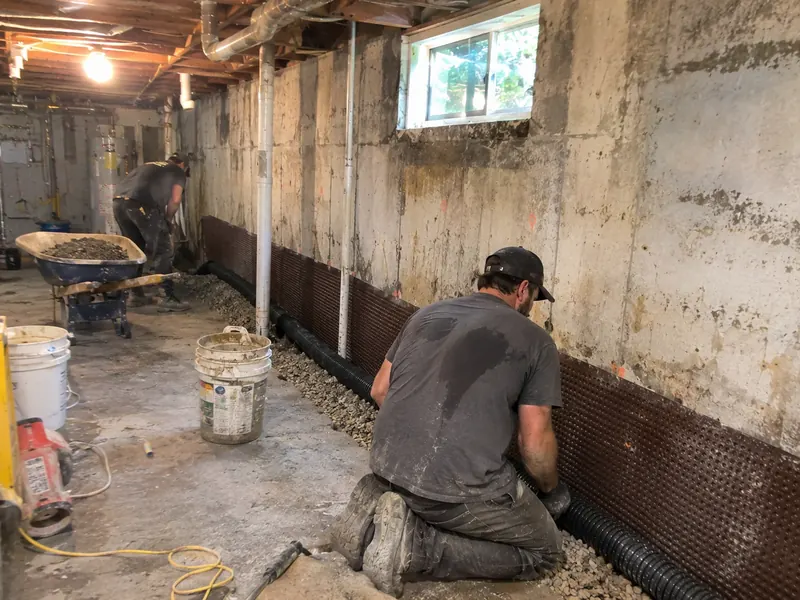
- A narrow trench is cut in the concrete floor along the inside of the foundation walls.
- A perforated drain pipe (drain tile) is laid in washed gravel in the trench.
- A dimpled plastic membrane is often attached to the lower wall so water running down the wall drains into the pipe.
- The pipe slopes to a sump pit, where a sump pump sends the water outside, away from the house.
- The floor is patched with new concrete.
Cross-section: outside soil on the left, inside the basement on the right.
- Groundwater pressure. After rain, clay soil holds water against the wall and under the footing.
- Dimpled membrane. Water that seeps through the wall runs down behind it instead of onto the floor.
- Perforated drain tile in gravel. Runs along the footing and slopes toward the sump.
- Sealed sump pit and pump. Collects the water and pumps it out.
- Discharge line. Sends the water outside, well away from the foundation.
Why it works well for Cincinnati homes
Clay-heavy soil around much of the city holds water against foundations long after a storm passes. Interior drain tile relieves that pressure from the inside, so it doesn’t require digging up landscaping, driveways or steep hillside yards. That makes it a good fit for older homes on tight city lots in places like Northside, Clifton and Price Hill.
Interior vs. exterior waterproofing
Both cross-sections: outside soil on the left, inside the basement on the right.
- Interior waterproofing. Water still reaches the wall, but a membrane on the inside guides it into a drain beside the footing, and a sump pump sends it outside.
- Exterior waterproofing. A membrane, drainage board, gravel and footing drain on the outside stop the water and carry it away before it reaches the wall.
| Interior drain tile | Exterior waterproofing | |
|---|---|---|
| How it works | Collects water inside and pumps it out | Membrane and drain stop water outside the wall |
| Typical cost | $5,000 – $15,000 | $10,000 – $30,000+ |
| Disruption | Basement only, usually 1–3 days | Excavation around the house, a week or more |
| Best for | Most wet basements and cove-joint leaks | Failing walls, new construction, or finished basements you can’t open up |
Prices are estimates, not quotes. These are approximate ranges and are not guaranteed. Your price depends on your home and the contractor. Call (513) 445-8106 or fill out the form for a quote.
Not sure which you need? Read about foundation and exterior waterproofing or ask for an inspection.
What a good interior system includes
- A sealed sump pit with a lid (which also cuts down on humidity and radon)
- A quality primary pump, plus a battery backup if your area loses power in storms
- A discharge line that sends water well away from the foundation, not right back against it
- Inspection ports so the drain can be flushed later
- A written warranty that transfers if you sell the house
Frequently asked questions
How much does interior drain tile cost in Cincinnati?
A full-perimeter system typically runs $5,000 to $15,000, depending on basement size, wall type and whether a new sump pit is needed. Partial systems for one problem wall cost less.
Will I need a sump pump?
Yes. Interior drain tile needs a sump pump to remove the water it collects. If you already have one, the specialist will check whether it’s sized correctly.
Does interior waterproofing fix cracks?
It manages water that comes through cracks, but structural cracks or bowing walls are a separate foundation repair job.
Can I finish my basement after interior waterproofing?
Yes. Many homeowners waterproof first so the finished space stays dry. Ask for a wall membrane that drains into the system behind the new walls.
Last reviewed 2026-11-17.