Where is the water coming from?
| What you see | Likely cause | Usual fix |
|---|---|---|
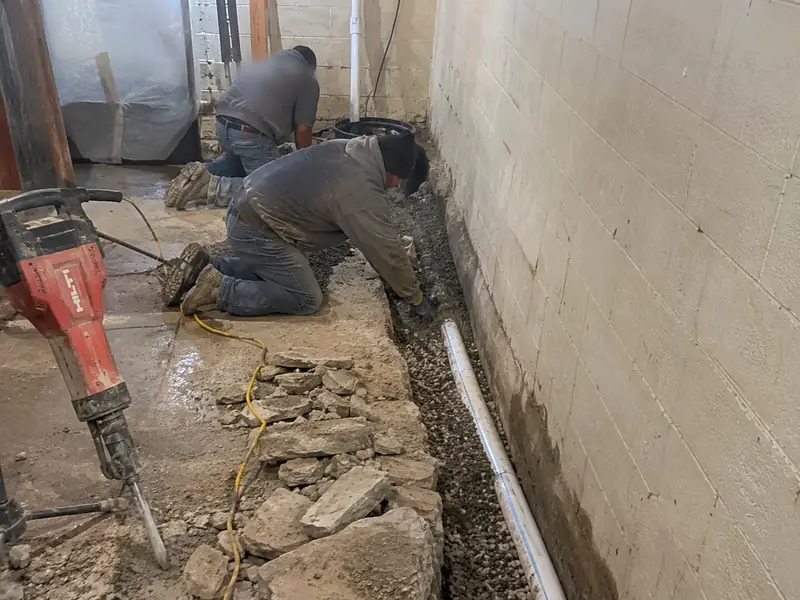
| Water along the base of the walls after rain | Hydrostatic pressure at the cove joint | Interior drain tile and a sump pump |
| A leak from one crack | Foundation crack | Crack injection |
| Water near a basement window | Window well filling up | Window well drain, cover, or a new window |
| Damp walls everywhere, no puddles | Condensation or poor drainage outside | Dehumidifier, gutters and grading |
| Water coming up through a floor drain | Sewer backup or a clogged drain | Plumber, backwater valve, and report to MSD |
| Water where a pipe enters the wall | Gap around the pipe penetration | Seal the penetration |
Quick test: tape a square of aluminum foil to a damp wall for 24 hours. If moisture forms on the room side, it’s condensation. If it forms on the wall side, water is coming through the wall.
Fixing a leaking crack
Most leaking cracks in poured concrete walls are sealed with crack injection. Epoxy or polyurethane is pumped into the crack from the inside so it fills the full depth of the wall. It typically costs $300 to $1,000 per crack and takes a few hours. Surface patches and hydraulic cement rarely last, because water keeps pushing in behind them.
Prices are estimates, not quotes. These are approximate ranges and are not guaranteed. Your price depends on your home and the contractor. Call (513) 445-8106 or fill out the form for a quote.
Horizontal cracks, cracks wider than about 1/4 inch, and walls that bow or lean can mean the wall is moving. That’s a structural problem for a foundation repair specialist, and it should be checked before you waterproof.
Things to check yourself first
- Clean the gutters and make sure downspouts discharge 6 to 10 feet from the house
- Check that the soil slopes away from the foundation, not toward it
- Clear leaves out of window wells and add covers
- Test your sump pump by pouring water into the pit
These fixes are cheap, and in many Cincinnati homes they solve light leaks on their own. If water keeps coming in after a heavy rain, the problem is usually below the ground and needs a waterproofing specialist.
Why patching rarely holds
Hydraulic cement and waterproof paint can slow small leaks. But Cincinnati’s clay soil holds water against the walls and keeps pushing. Patches usually fail when the pressure has nowhere to go. A lasting repair either seals a specific crack from the inside out, which is what injection does, or relieves the pressure with drainage.
Frequently asked questions
How much does basement leak repair cost?
A single crack injection usually costs $300 to $1,000. Leaks along the base of the walls typically need drain tile, which runs $5,000 to $15,000 for a full basement. See the cost estimates.
Should I fix a basement leak before selling my house?
Usually, yes. Ohio’s residential property disclosure form asks sellers about known water problems, and an active leak will come up during the buyer’s inspection. A documented repair with a transferable warranty can help the sale.
Does homeowners insurance cover basement leaks?
Standard policies usually exclude groundwater seepage and gradual leaks. Sewer backup coverage is often an add-on. Check your policy and call your agent.
My basement only leaks in heavy storms. Do I still need a fix?
Leaks that come and go usually get worse over time, and repeated wetting leads to mold and damaged belongings. An inspection can tell you if a small fix like gutters or grading is enough.
Last reviewed 2026-11-17.