1. Clay soil holds water against your walls
Much of the region has clay-rich soils over shale and limestone bedrock. Clay drains slowly, so after a storm, water sits against basement walls and builds pressure (hydrostatic pressure) that forces it through cracks and the joint where the wall meets the floor. Clay also expands when wet and freezes in winter, which pushes on the walls.
Typical fixes: interior drain tile to relieve the pressure, or exterior waterproofing with gravel backfill.
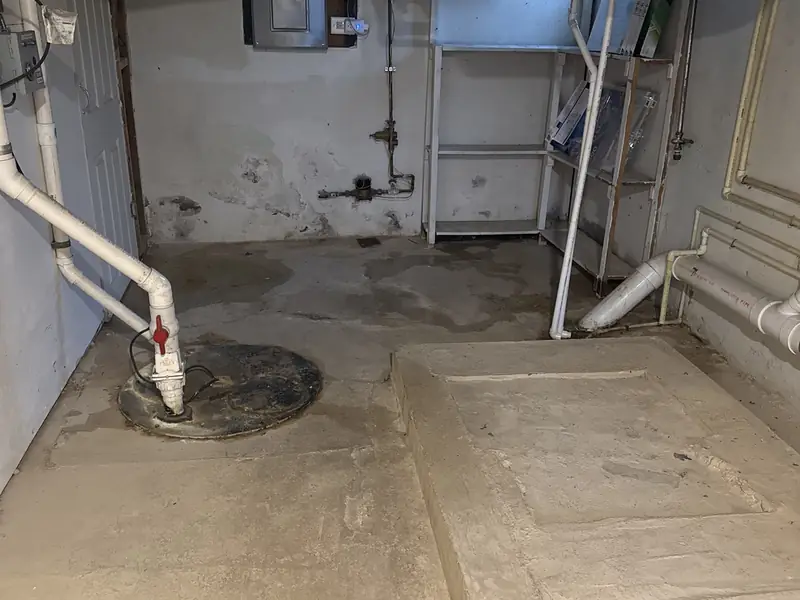
2. Hillsides add pressure, and sometimes movement
Cincinnati is hilly, and many slopes sit on the Kope Formation, a shale-heavy bedrock layer. According to the Ohio Department of Natural Resources, most bedrock slope failures in the area happen in the Kope Formation, and the Cincinnati area has one of the highest per-capita costs from landslide damage of any U.S. city (ODNR GeoFacts No. 8). Homes built into hillsides get groundwater running toward the uphill wall, and slow soil movement can crack or bow basement walls.
Typical fixes: drainage on the uphill side, plus wall stabilization by a foundation repair specialist if walls are moving.
3. Older foundations weren’t built for drainage
Many homes in neighborhoods like Westwood, Price Hill, Northside, Walnut Hills, Oakley and Norwood, and in older parts of Covington and Newport, were built with fieldstone, brick or early concrete block foundations. Many have no working footing drains, or drains that clogged decades ago. Mortar joints wear away over time and let water through.
Typical fixes: interior drain tile, repointing, and wall coatings applied over drainage.
4. Heavy rain, and storms that hit all at once
The region gets more than 40 inches of precipitation in a normal year (NWS climate normals for CVG). Intense summer storms are the real test: the July 2026 flash flooding overwhelmed drainage across the area, and MSD went on to investigate more than 1,500 sewer backup reports (WVXU).
Typical fixes: gutters and downspouts sized for heavy rain, a properly sized sump pump with a battery backup, and drain tile.
5. Sewer backups (a different problem)
Parts of the city are served by older combined sewers, which carry both stormwater and sewage. In heavy storms, they can back up into basements through floor drains. That isn’t groundwater, and waterproofing alone won’t stop it.
- Report it within 48 hours. MSD’s Sewer Backup Program requires reports within 48 hours of discovery for potential cleanup or reimbursement on eligible properties. The program has run since 2004.
- Prevention: a backwater valve or floor drain plug, which is typically a plumbing job. MSD may provide a prevention device to eligible properties.
- Disputes: MSD’s program has an independent ombudsman at the Legal Aid Society of Greater Cincinnati.
6. Simple drainage problems around the house
Clogged gutters, downspouts that dump water next to the foundation, and soil that slopes toward the house cause a large share of basement leaks, and they’re the cheapest to fix. Check these first.
Frequently asked questions
Why does my basement only leak after heavy rain?
Heavy rain saturates clay soil and builds pressure against the walls. Water then finds the weakest points, usually the cove joint, cracks and pipe penetrations.
How do I know if it’s groundwater or a sewer backup?
Groundwater usually seeps in at walls or the wall-floor joint and is clear. Sewer backups come up through floor drains, toilets or tubs and smell like sewage. If you think it’s a sewer backup, report it to MSD within 48 hours.
Are hillside homes in Cincinnati harder to waterproof?
They often need more drainage on the uphill side, and exterior excavation needs extra care on steep slopes. Interior systems are a common choice for these homes.
Last reviewed 2026-11-17.